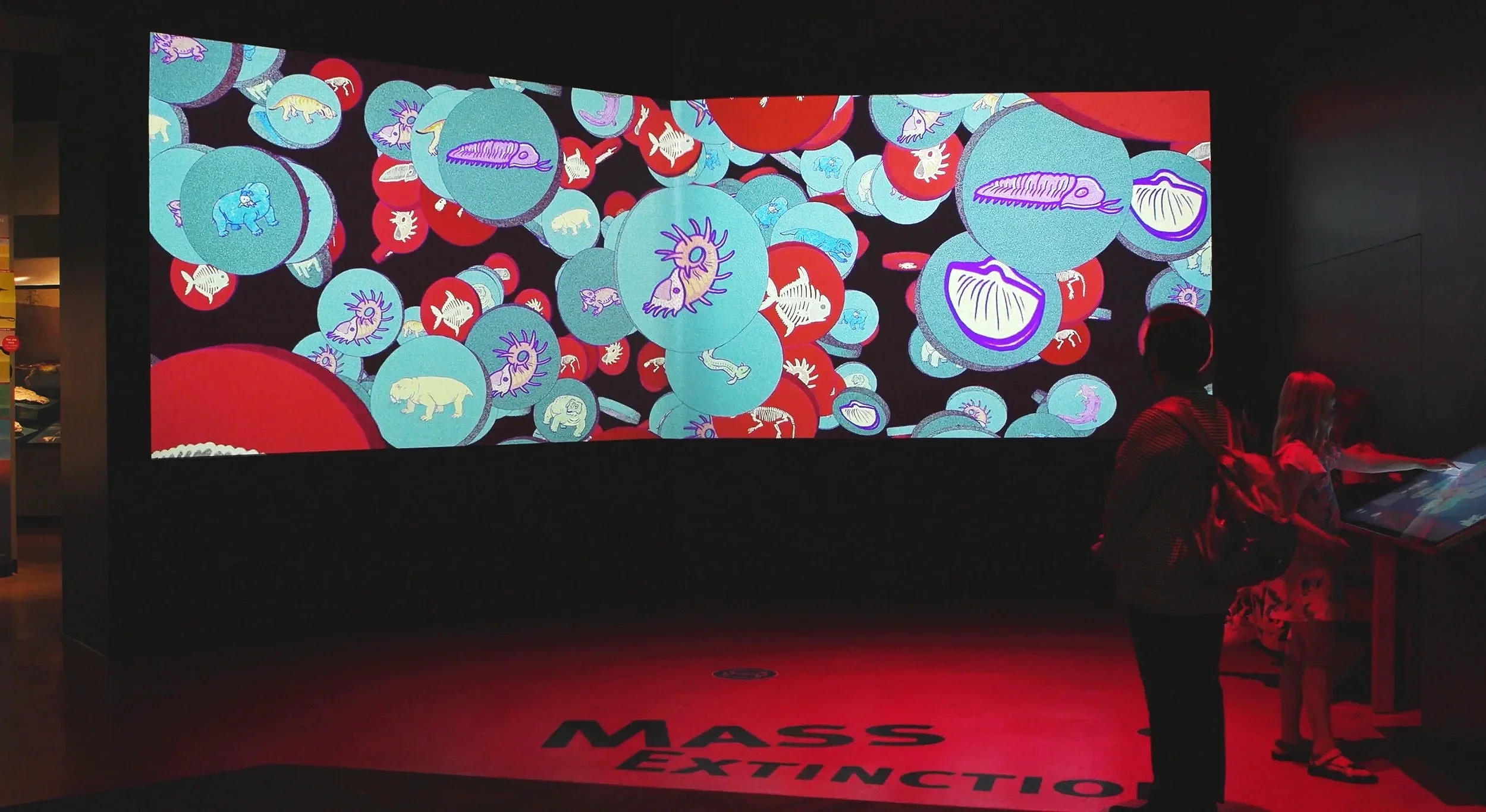
Evolving Planet: Permian Extinction
My Role
Creative Direction
Immersive Storytelling
Projection Design
Overview
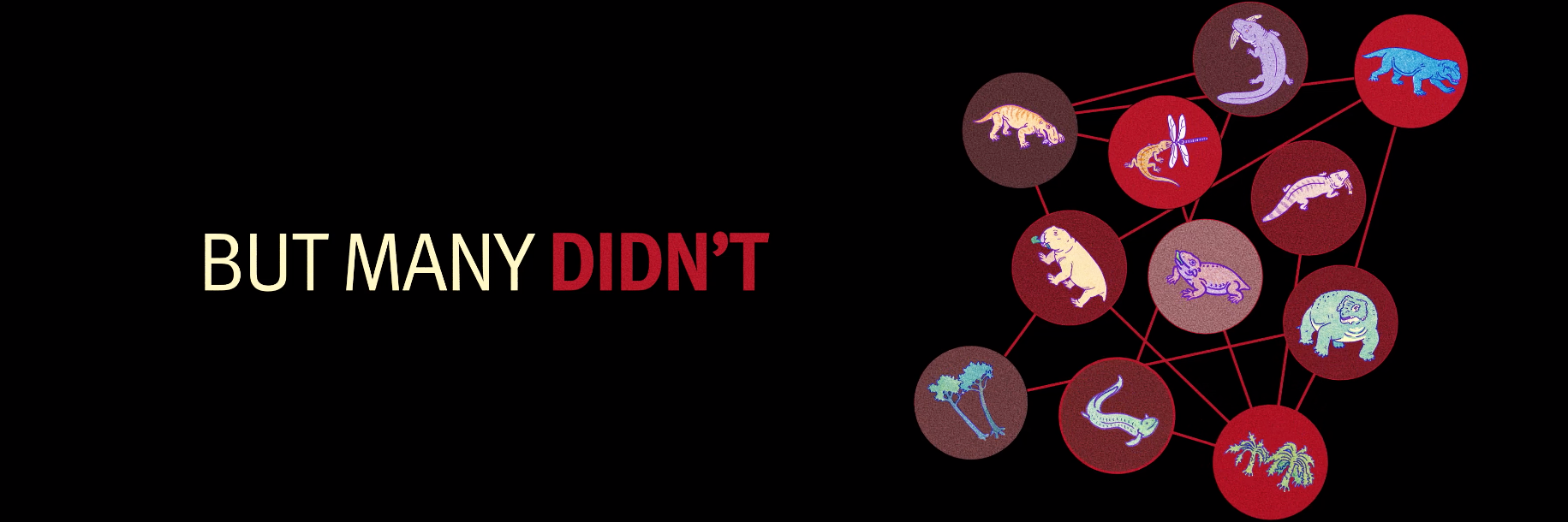
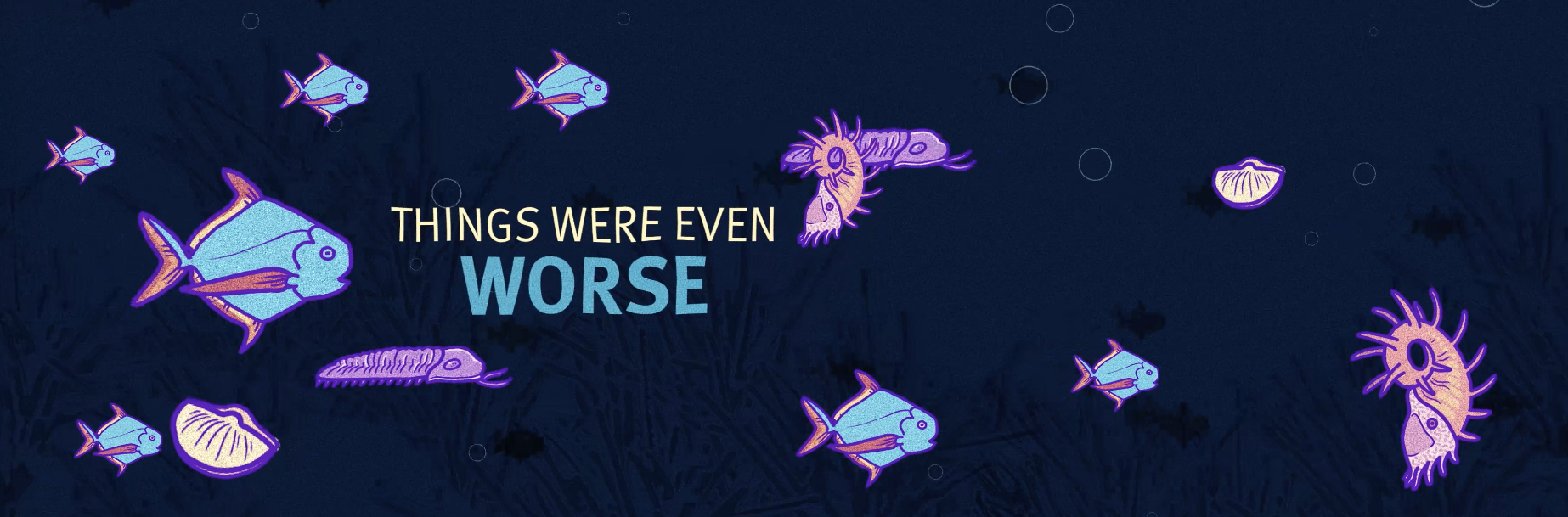
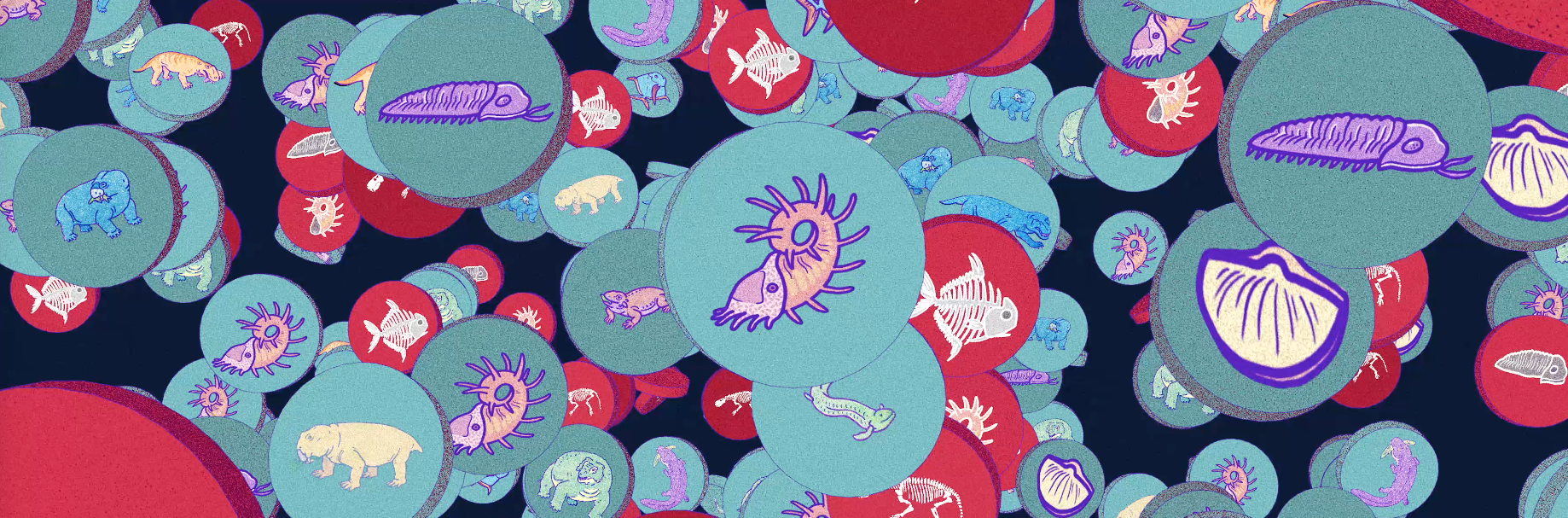
The Permian Extinction was the most devastating extinction event in Earth's history, eliminating nearly all marine species and dramatically reshaping life on the planet. For the Evolving Planet exhibition, our challenge was to transform this vast scientific story into an immersive experience that visitors could both understand and feel.
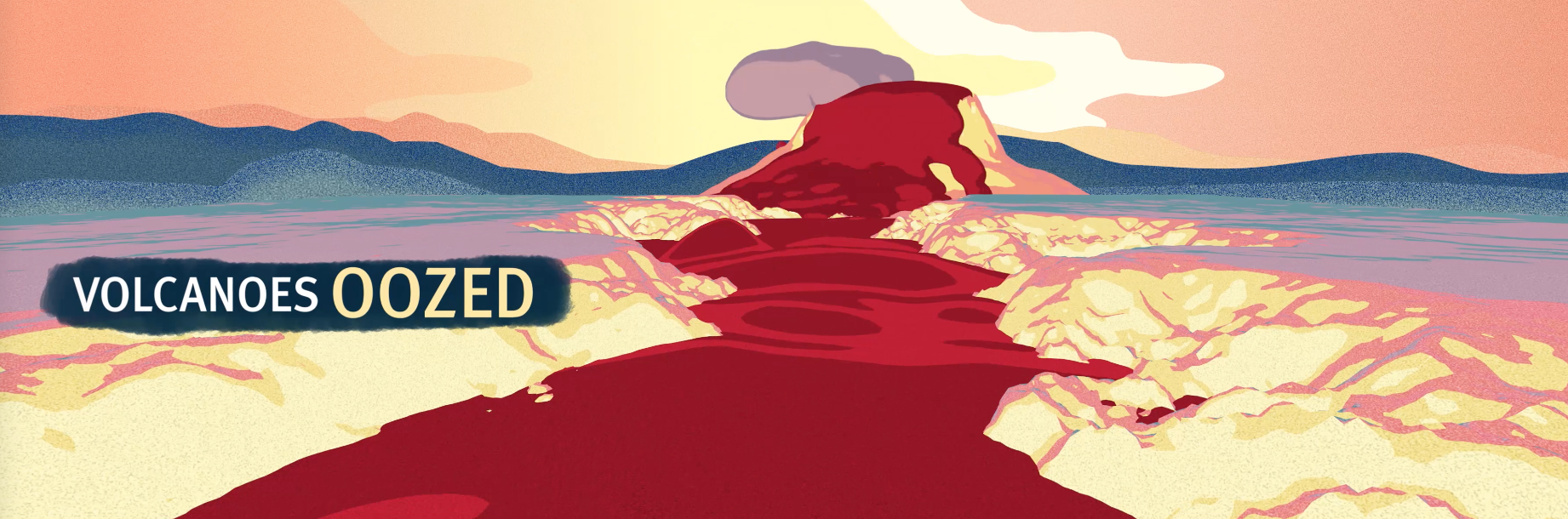
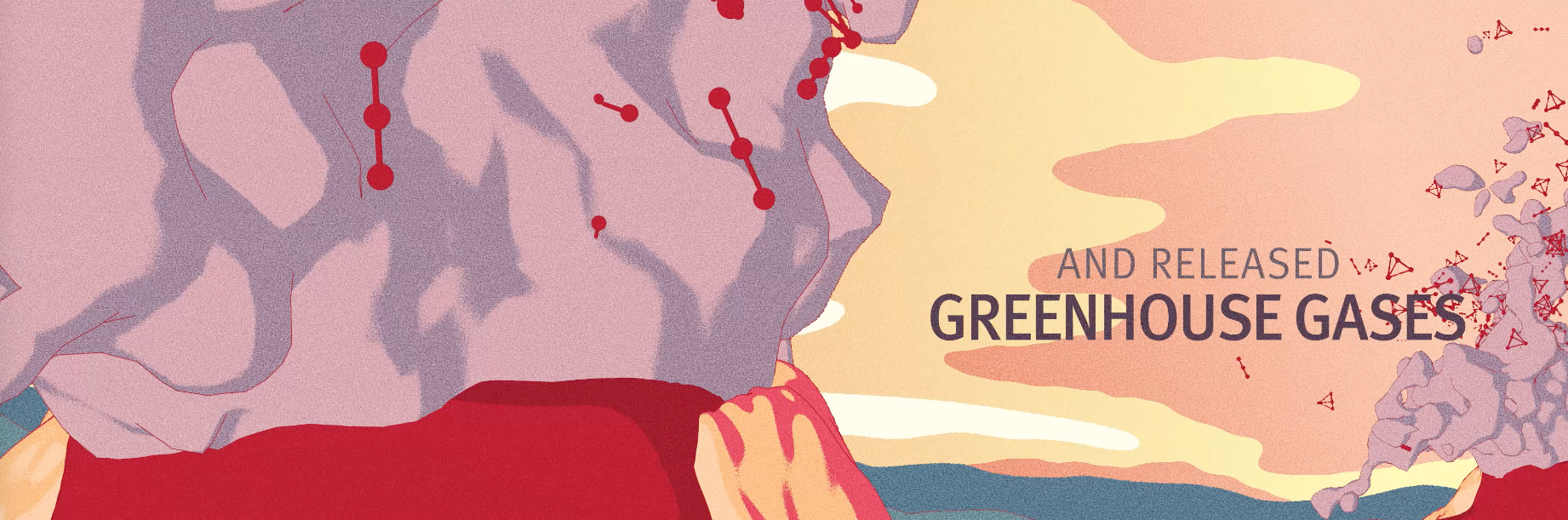
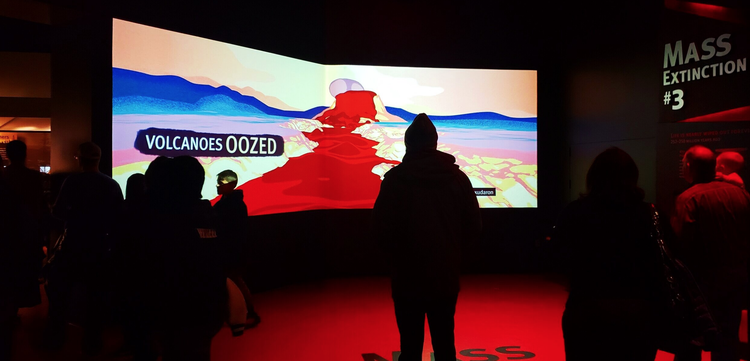
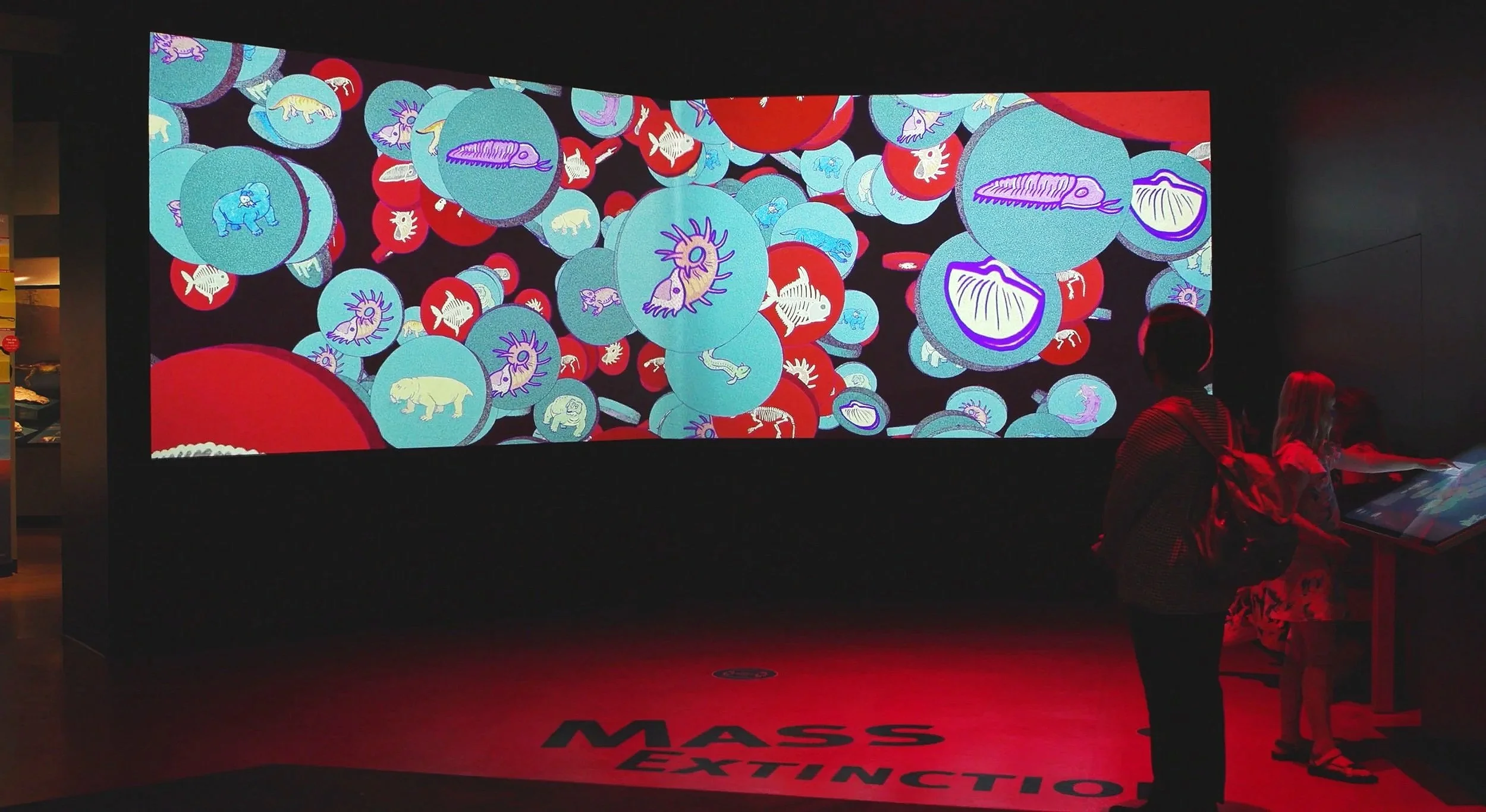
Rather than presenting the event through text and static imagery alone, we created a large-scale projection experience that immersed visitors in the dramatic transformation of Earth's ecosystems—from thriving prehistoric landscapes to environmental collapse and the emergence of a changed world.
The Challenge
The Permian Extinction unfolded over millions of years, making it difficult for visitors to grasp the scale and complexity of its environmental impact.
Our goal was to communicate not only what happened, but why it mattered.
The experience needed to:
Translate complex paleontological research into an engaging visual narrative.
Balance scientific accuracy with emotional impact.
Illustrate environmental change across immense spans of time.
Integrate animation, sound, and lighting into a cohesive exhibition experience.
My Role
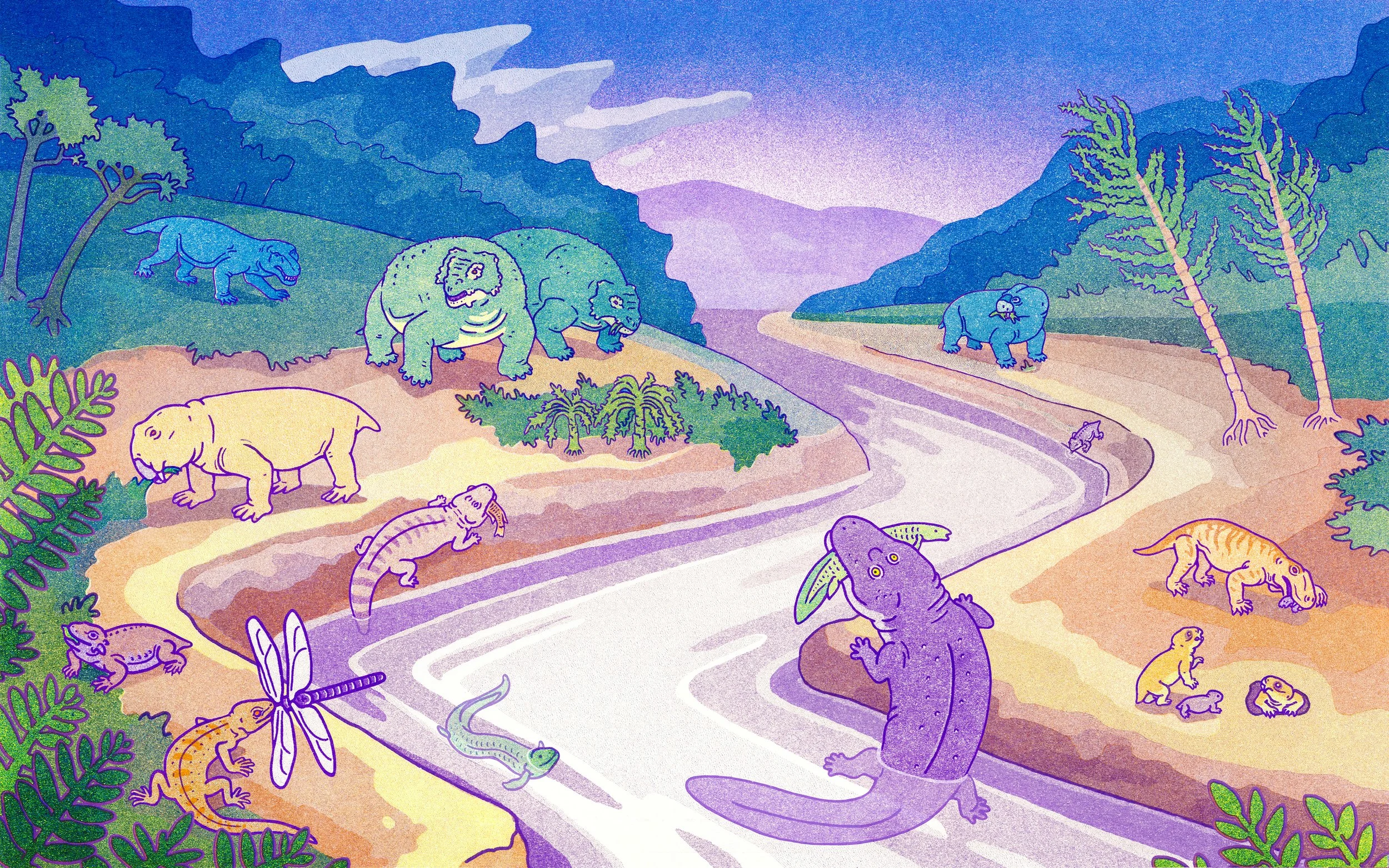
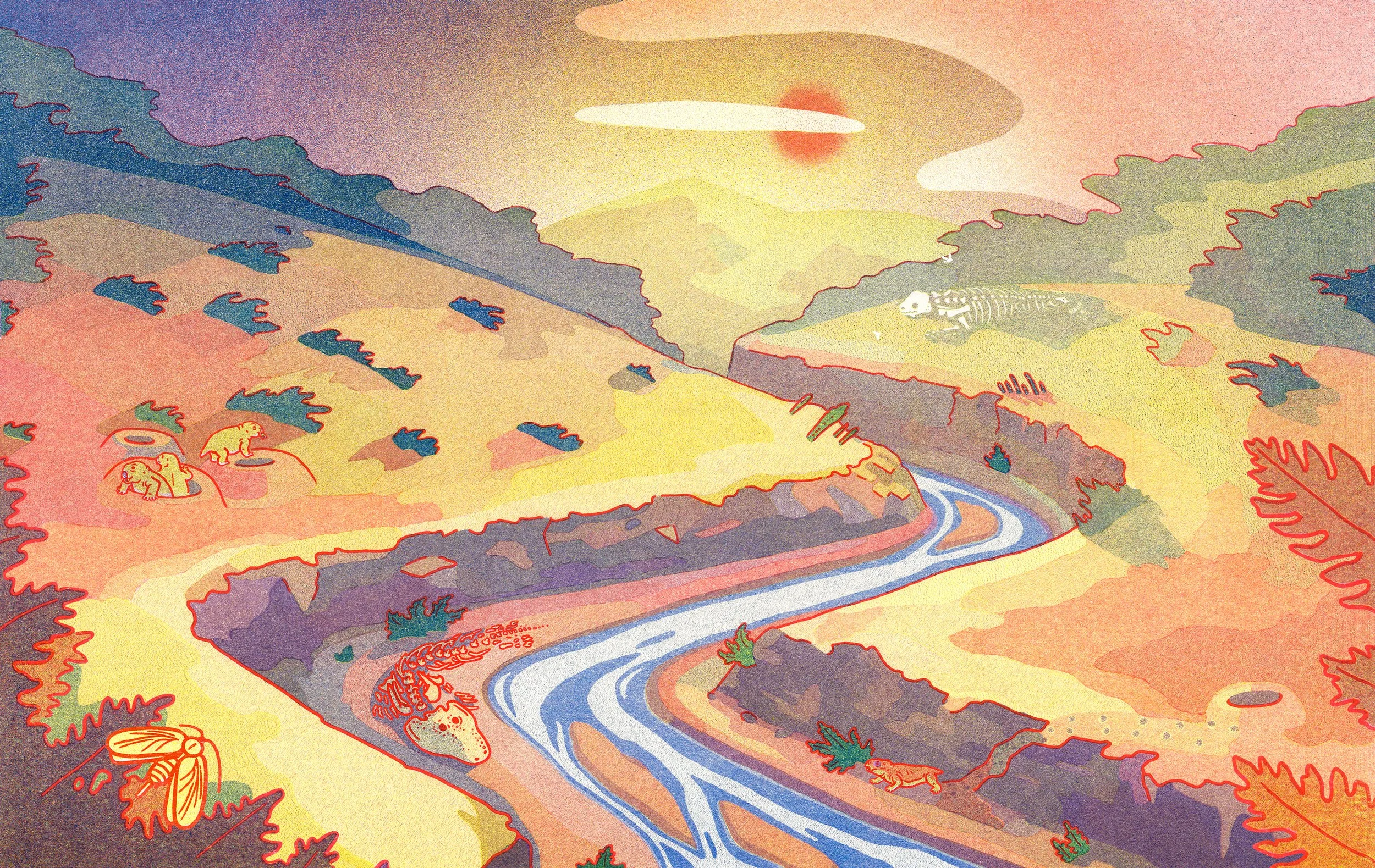
As Senior Multimedia Creative, I led the creative direction for the immersive media experience, shaping how illustration, animation, sound, and environmental design worked together to tell the story. Working closely with paleo illustrator Greer Stothers, we developed scientifically accurate "before and after" landscapes representing the Permian and Triassic periods. These illustrations became the visual foundation for the experience.
I then collaborated with motion designer Warren Rudd to transform the artwork into cinematic sequences that visualized volcanic eruptions, changing climates, collapsing ecosystems, and the slow recovery of life. To complete the experience, I partnered with composer Josh Beck to develop an immersive soundscape that blended original music with environmental audio—including insects, volcanic activity, burning coal, and shifting natural environments—to reinforce the emotional arc of the story.
Throughout the project, I collaborated across disciplines to ensure every creative element supported a unified visitor experience.
Creative Direction
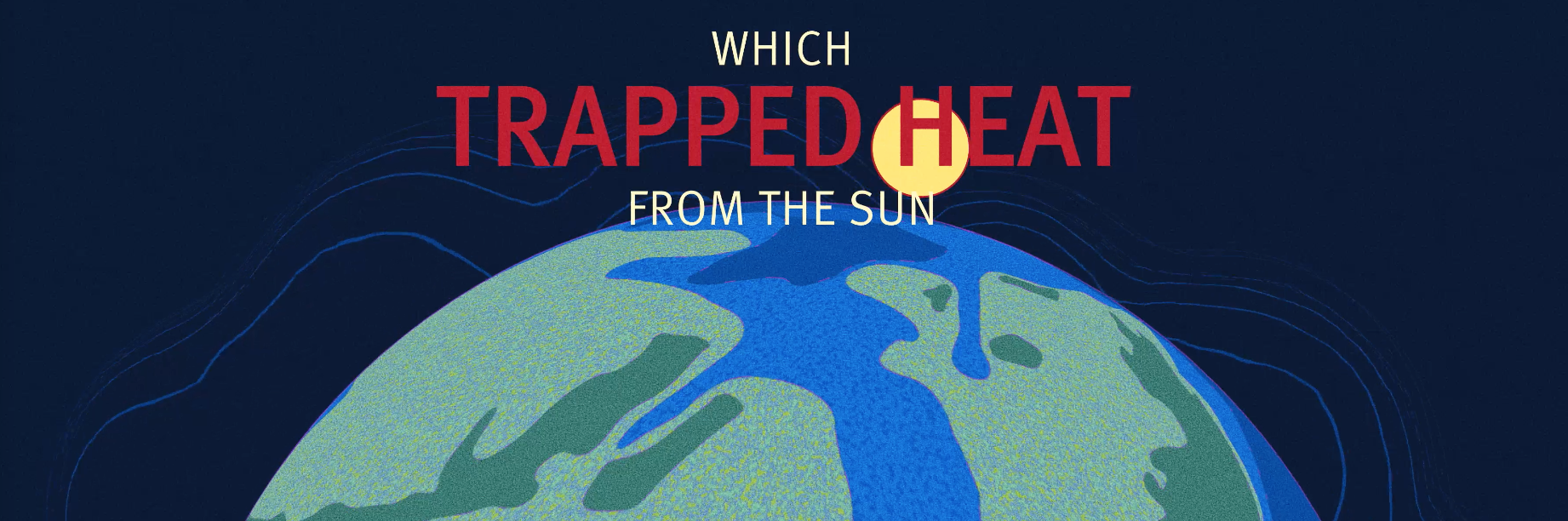
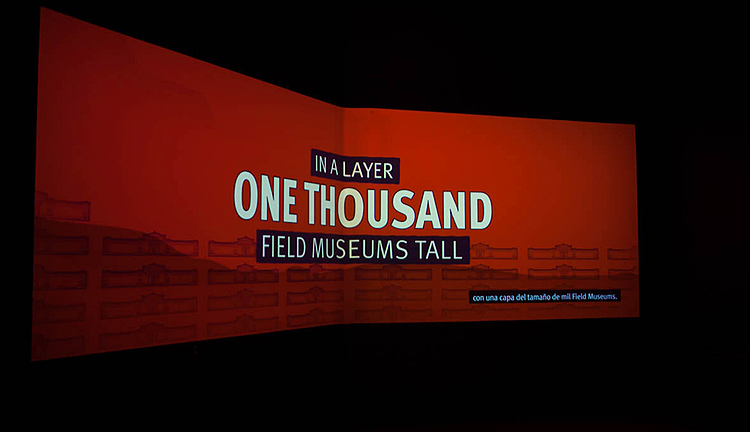
Spanning two wall-sized projections, the installation surrounded visitors with sweeping prehistoric landscapes that gradually transformed through volcanic eruptions, atmospheric change, ecosystem collapse, and eventual recovery. Layered animation, environmental sound, and integrated lighting created a multisensory experience that encouraged visitors to observe not only what disappeared, but how life ultimately evolved in the aftermath. By combining multiple creative disciplines into a unified narrative, the installation transformed a complex scientific concept into an emotionally engaging journey through one of Earth's most significant moments.