SUE the T. rex Experience: Projection Mapping
Temporary Exhibition | Field Museum
My Role
Creative Direction
Story Development
Media Production
Projection Mapping
Cross-disciplinary Collaboration
Overview
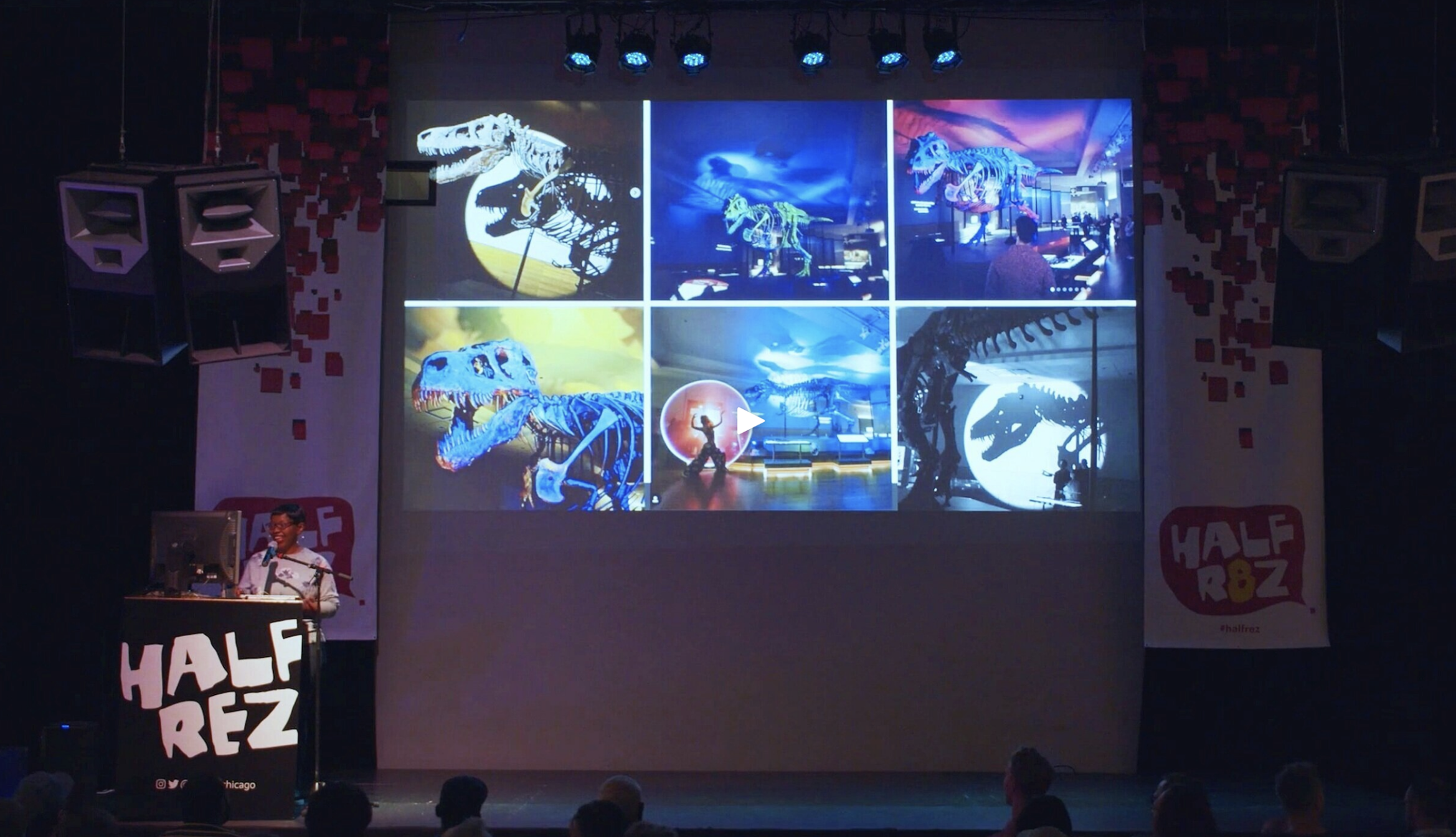
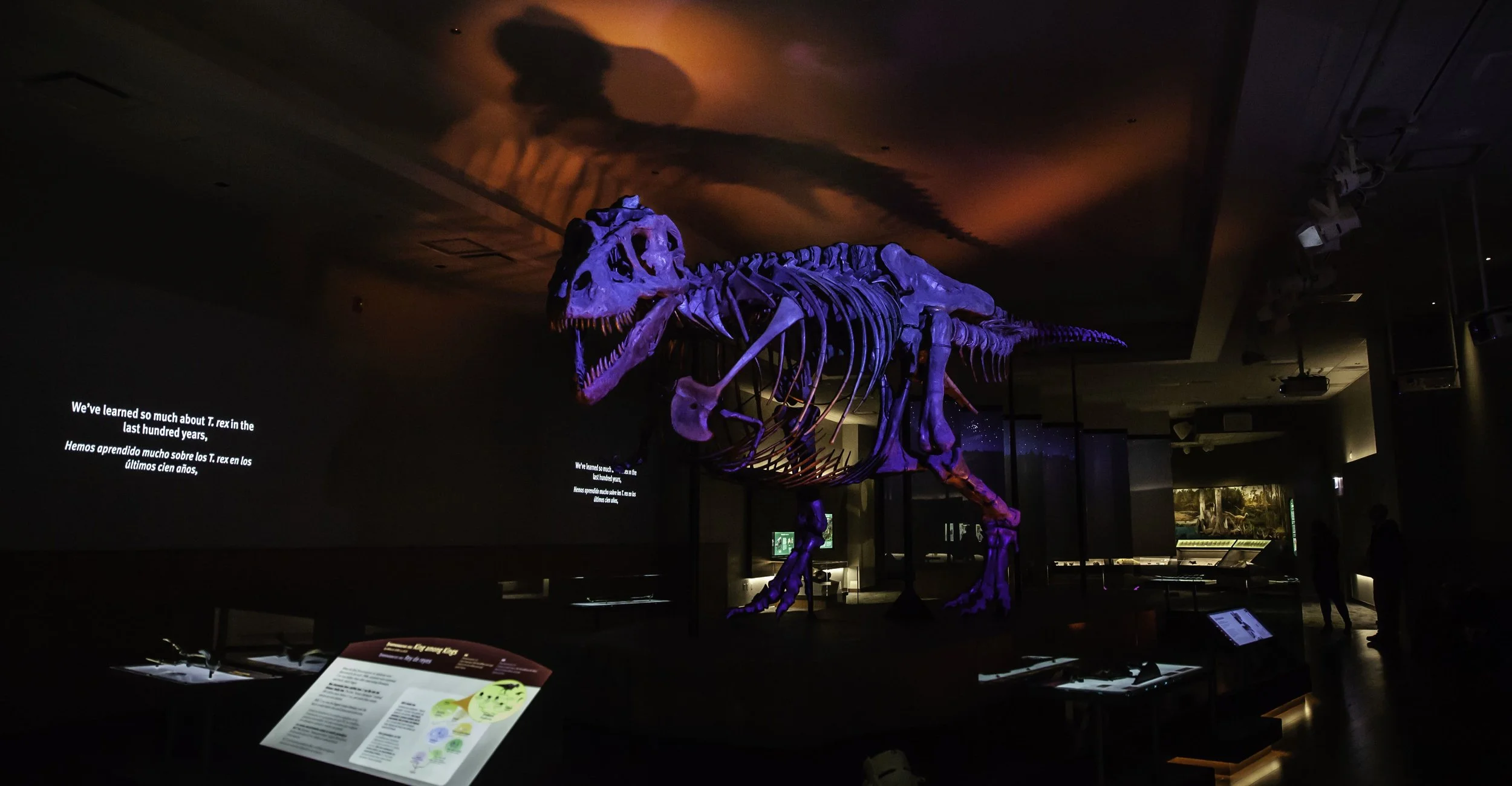
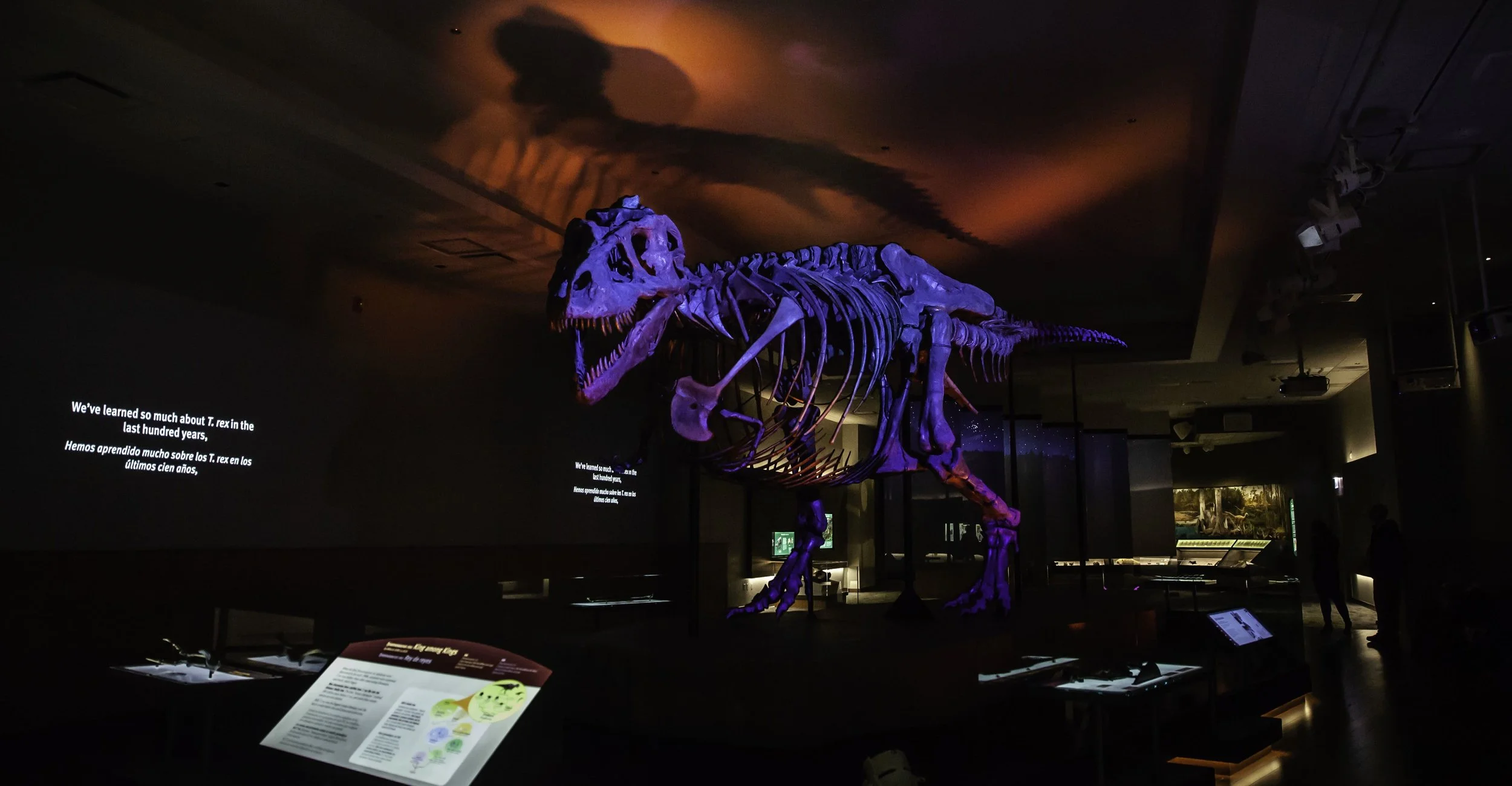
SUE the T. rex Experience is the Field Museum's permanent exhibition centered around SUE, the world's most complete and best-preserved Tyrannosaurus rex skeleton. To deepen visitors' connection with this iconic fossil, I led the creative development of the SUE Light Show—an immersive projection mapping experience that combined theatrical lighting, animation, sound, and narration to transform scientific research into a cinematic storytelling experience. Later, I collaborated with exhibit developers and lighting designers to adapt the experience for the SUE the T. rex Experience Traveling Exhibition, reimagining the original show using portable theatrical lighting while preserving its educational and emotional impact.
Creative Direction
The goal of the SUE Light Show was to transform the world's most complete T. rex skeleton from a static fossil display into a living story. Rather than simply presenting scientific facts, I wanted visitors to experience SUE as an individual animal whose injuries, survival, and mysteries could be revealed through light, sound, and cinematic storytelling.
My process began with extensive research into SUE's paleontological history, exploring not only the skeleton's remarkable 90% completeness but also the visible injuries and unanswered scientific questions that continue to fascinate researchers. Working closely with curators and exhibit developers, I distilled complex scientific content into a narrative that was both scientifically accurate and emotionally engaging for visitors of all ages.
The creative direction centered on using projection mapping, theatrical lighting, sound, and narration as a unified storytelling language. Every projected sequence, lighting transition, and audio cue was designed to guide visitors through key moments in SUE's life while emphasizing the fossil's scientific significance. Throughout production, I collaborated with museum staff to refine the pacing, visuals, and storytelling, ensuring the experience balanced educational content with moments of discovery and wonder.
Challenge
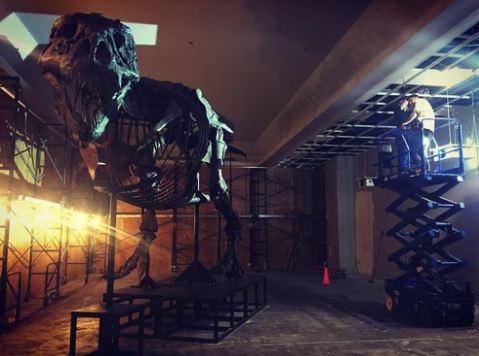
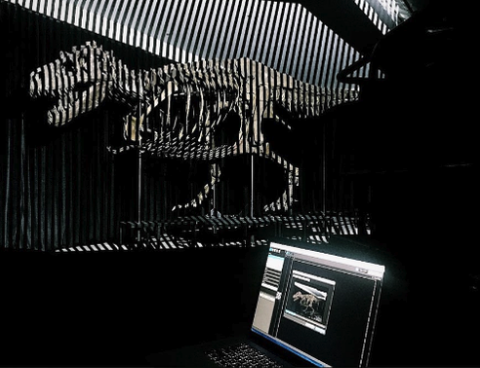
Creating the SUE Light Show required balancing storytelling, technology, and scientific interpretation within one of the Field Museum's most iconic spaces. Unlike a traditional projection surface, SUE's fossil skeleton presented a highly irregular three-dimensional form, making projection mapping onto the specimen a meticulous and technically demanding process that required months of testing, alignment, and refinement.
The experience also needed to seamlessly integrate multiple storytelling elements—including projection mapping, theatrical lighting, voiceover narration, and an original musical score—into a cohesive narrative. Every visual cue, lighting transition, and audio beat had to work together to guide visitors through SUE's story while maintaining scientific accuracy and emotional impact. Adding another layer of complexity, the installation operated within a continuous 20-minute gallery loop. The experience had to capture visitors entering at different moments, communicate a complete story without disrupting gallery flow, and transition naturally back to the beginning so it could run continuously throughout the day.
These creative and technical constraints required close collaboration across exhibit development, scientific content, media production, and lighting design to ensure the final experience felt seamless, immersive, and accessible to a broad audience.
Adapting the Experience for a Traveling Exhibition
When the exhibition was adapted into a traveling experience, we faced a new creative challenge: recreate the emotional impact of the original installation without projection mapping. Working alongside exhibit developers and lighting designers, I helped reimagine the show using portable theatrical lighting and a replicated SUE skeleton. I collaborated on rewriting the narration to fit the new format and produced an animatic with synchronized lighting cues that served as a creative blueprint for the lighting team.
To establish the visual language, I designed atmospheric lighting concepts in After Effects—including forest environments and the asteroid impact sequence—that informed the look, timing, and emotional rhythm of the final installation. Together with the lighting designers, we translated these digital concepts into theatrical lighting effects that could travel between venues.
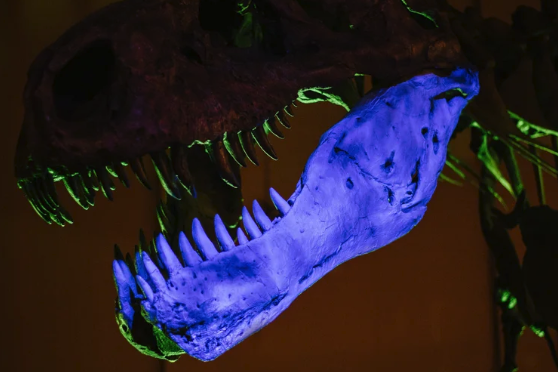
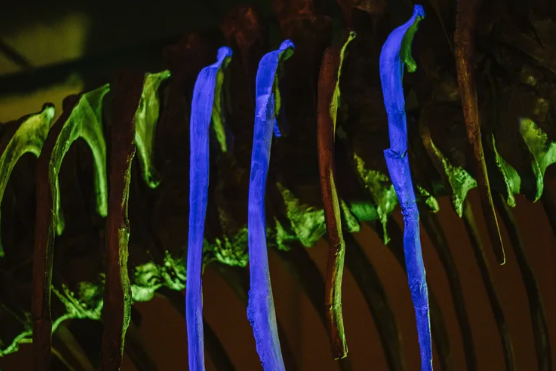
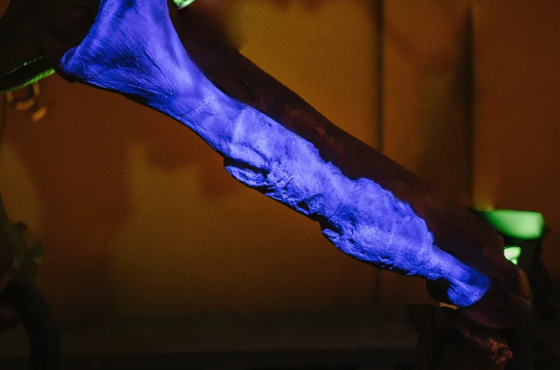
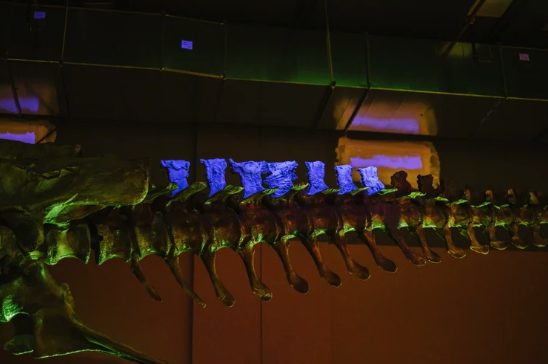
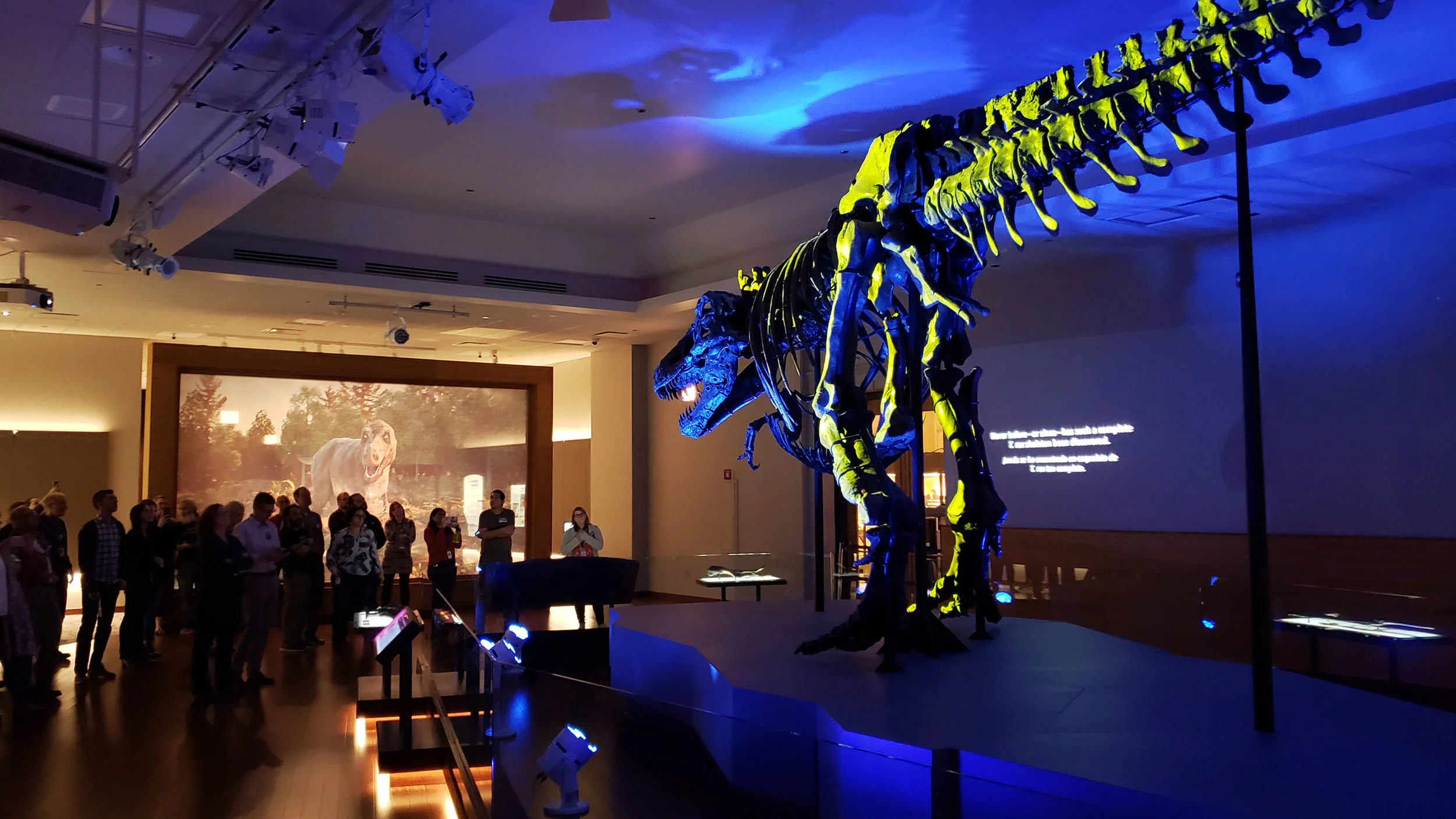
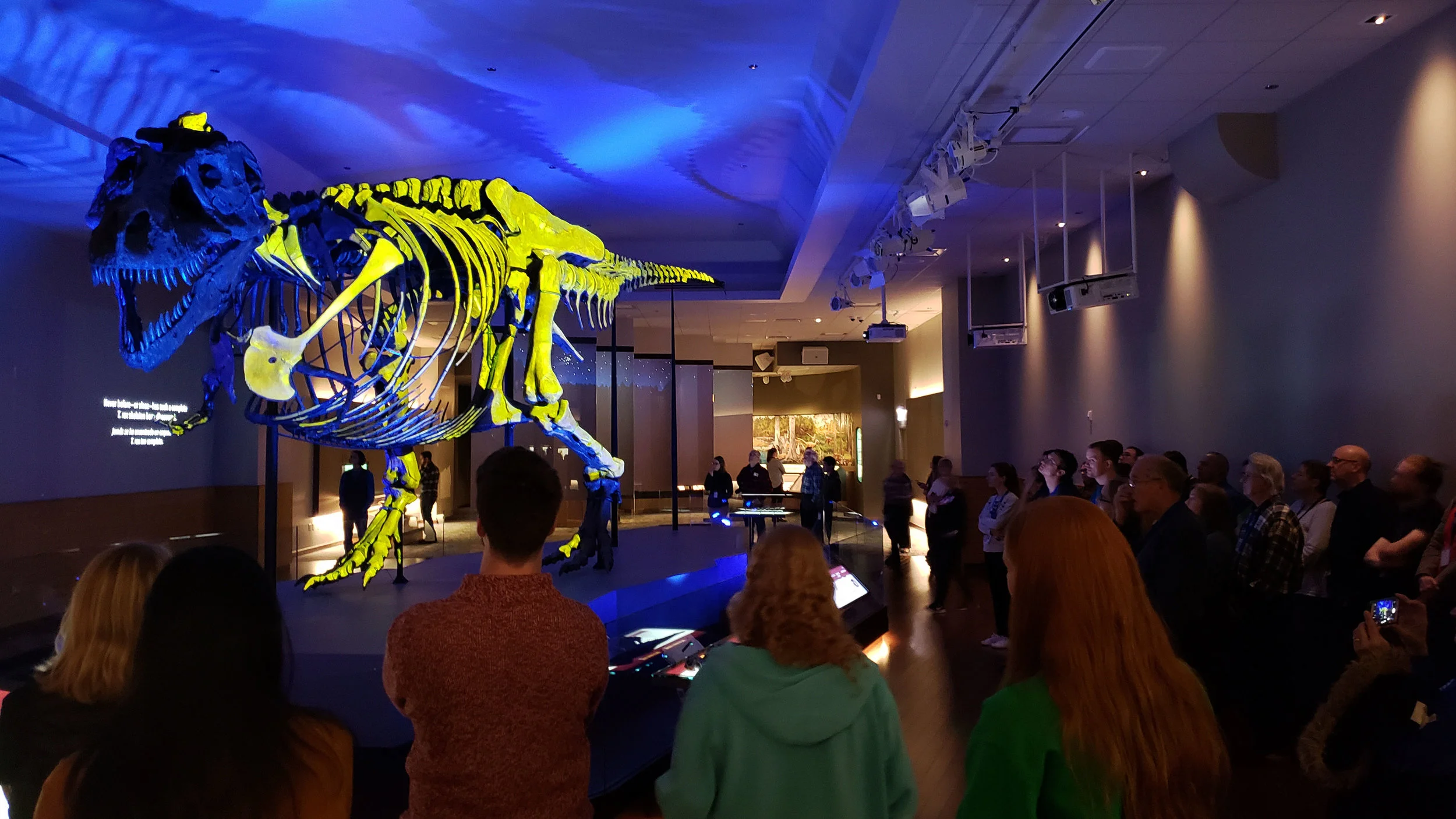
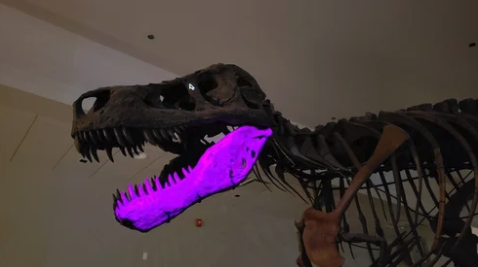
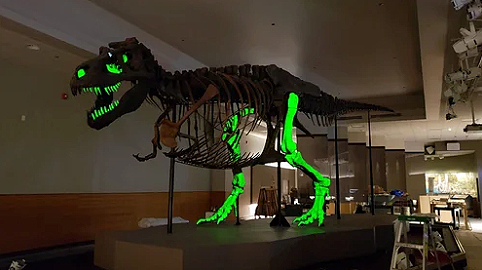
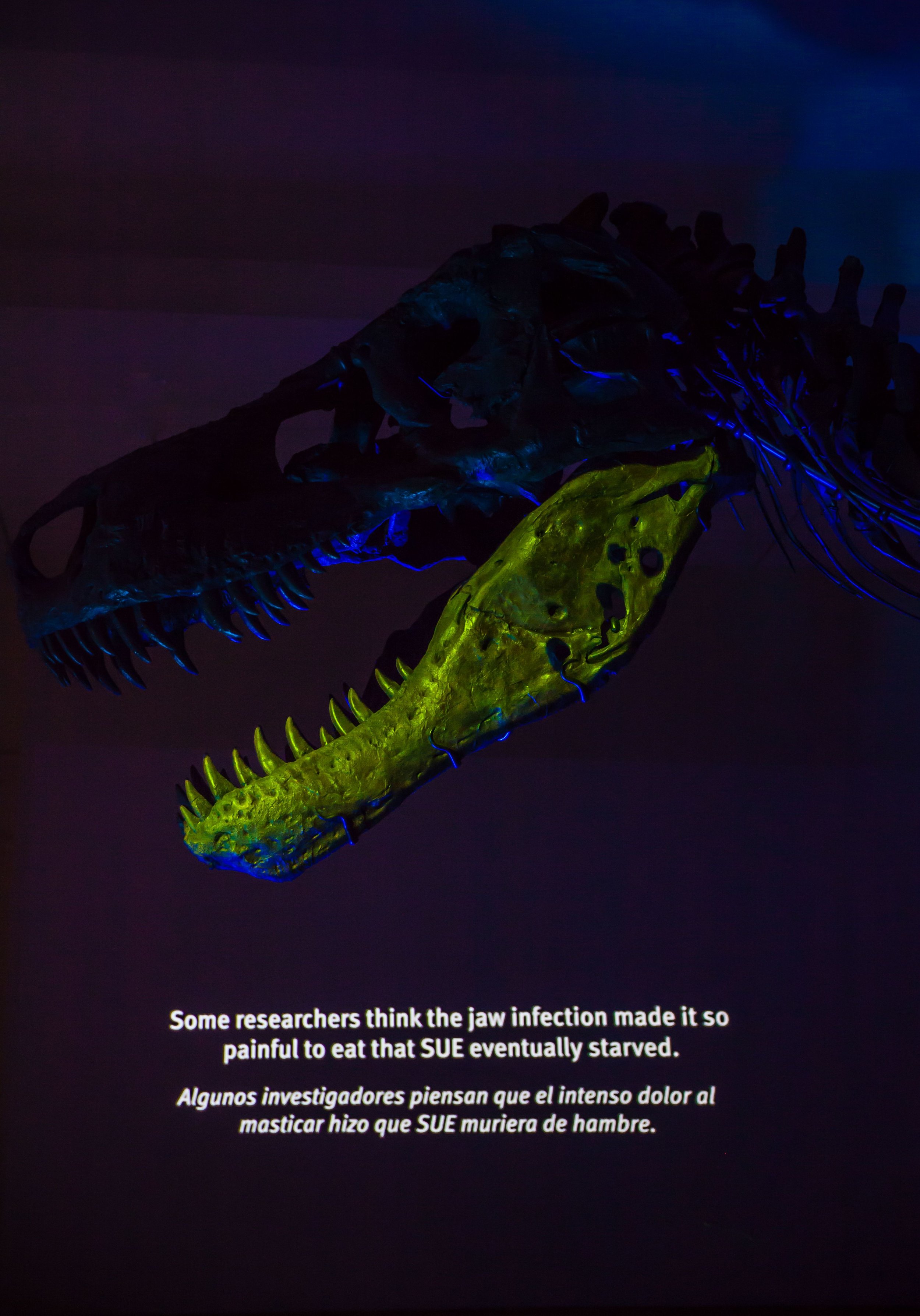
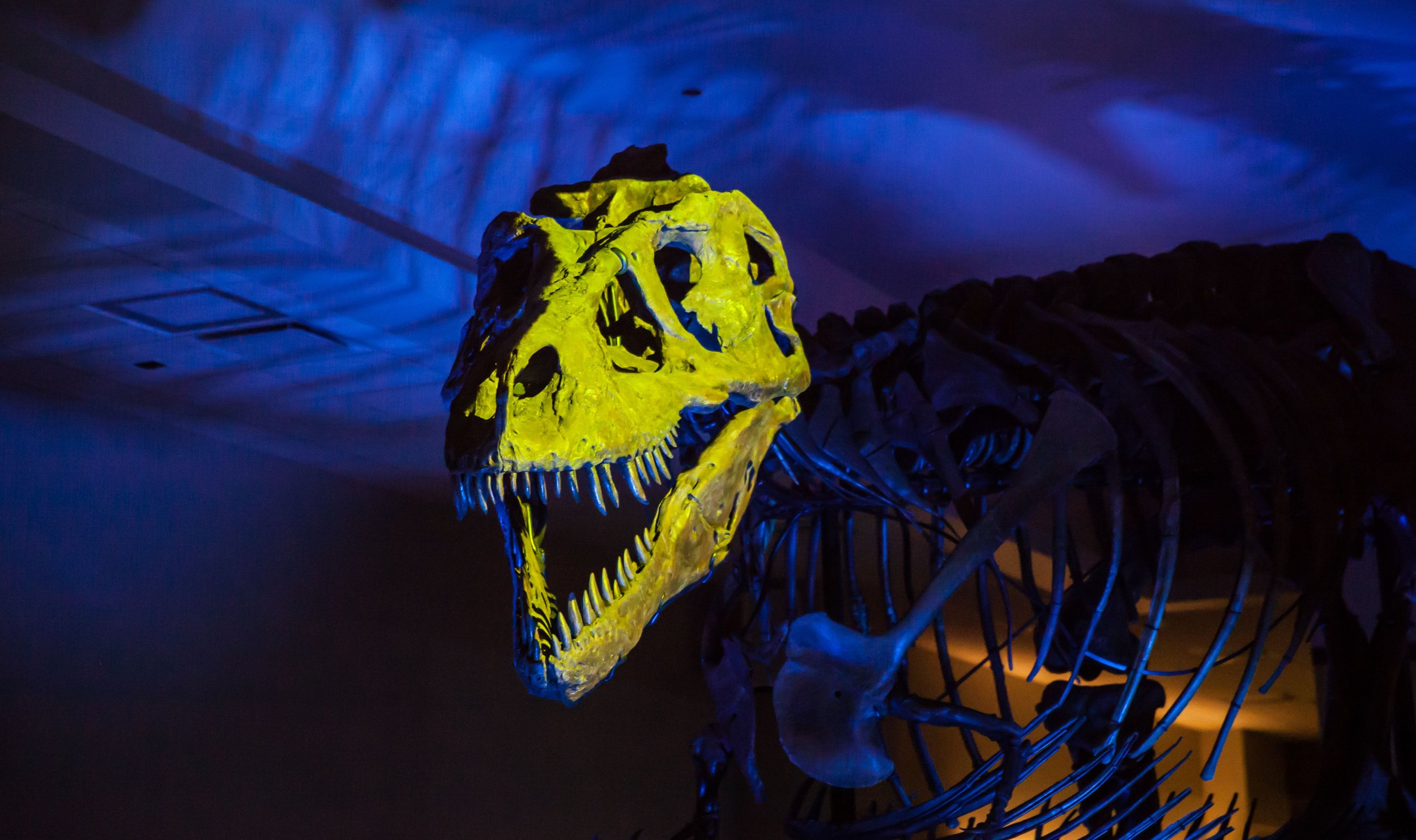
Because projected imagery was no longer available, we explored new techniques to tell SUE's story. Using UV lighting and carefully placed painted details, we highlighted the fossil's injuries—including the holes in the jaw, broken ribs, injured leg, arthritis, and fused tail vertebrae—allowing narration and lighting to reveal scientific discoveries in a dramatic and accessible way. Through ongoing collaboration with the lighting team and exhibit developers, we refined each sequence to preserve the storytelling intent and scientific accuracy of the original experience while meeting the practical demands of a touring exhibition.
Outcome
The resulting traveling exhibition successfully translated the immersive storytelling of the Field Museum's permanent installation into a flexible touring format. By reimagining projection mapping as a theatrical lighting experience, the exhibition preserved the emotional impact of SUE's story while making it possible for audiences around the world to experience the life and legacy of one of the most iconic dinosaurs ever discovered.
Following its opening, the experience received consistently strong audience responses across venues, reflecting high levels of visitor engagement and the effectiveness of the storytelling approach in creating an accessible and emotionally resonant experience within the gallery space.